
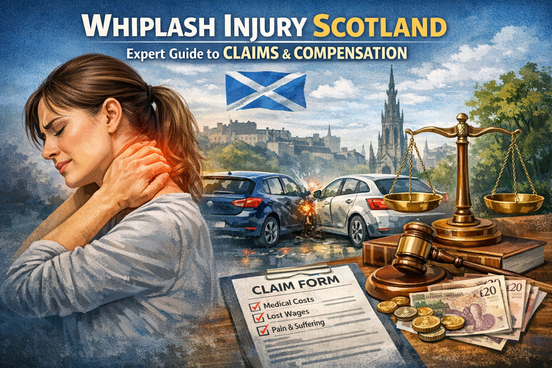
Experiencing a road traffic accident can be overwhelming, especially when the effects are not immediately visible. One of the most common outcomes of such incidents is a whiplash injury Scotland, a condition that can range from mild discomfort to long-term physical and psychological challenges.
While many people assume whiplash is minor, the reality is very different. For countless individuals across Scotland, it leads to lost income, disrupted routines, and ongoing medical care. Understanding your rights, the claims process, and how compensation works is essential if you want to protect both your health and your financial stability.
What Defines a Whiplash Injury?
A whiplash injury Scotland occurs when the neck is forced into a rapid back-and-forth motion, typically during a collision. This sudden movement can strain or damage soft tissues, including muscles, ligaments, and tendons.
Although it is most commonly associated with car accidents, whiplash can also result from:
• Workplace incidents
• Sports injuries
• Slips or falls in public spaces
Symptoms may not appear immediately, which is why many victims underestimate the severity of their condition.
Recognizing Symptoms and Long-Term Effects
The symptoms of a whiplash injury Scotland can vary widely from person to person. Some individuals recover quickly, while others experience long-lasting complications.
Common symptoms include:
• Persistent neck pain and stiffness
• Headaches that radiate from the neck
• Limited movement or flexibility
• Shoulder and upper back pain
• Fatigue or dizziness
In more serious cases, individuals may develop chronic pain or psychological effects such as anxiety, especially after traumatic accidents.
Ignoring these symptoms can lead to complications that affect both your personal and professional life.
Why Making a Claim Matters
After an accident, many people hesitate to pursue legal action. However, filing a whiplash claim scotland is not about exaggeration—it’s about fairness and recovery.
A claim allows you to:
• Recover lost earnings
• Cover medical and rehabilitation costs
• Receive compensation for pain and suffering
• Regain financial stability
Without taking action, you may end up bearing the full burden of someone else’s negligence.
Legal Framework in Scotland
Scotland has a distinct legal system, which means the process for a whiplash claim scotland differs from other regions of the UK.
To successfully pursue a claim, you must demonstrate:
• Duty of care was owed to you
• That duty was breached
• The breach caused your injury
The process is designed to ensure fairness, but it also requires proper documentation and a clear understanding of legal procedures.
This is why many individuals turn to experienced specialists such as Scotland Claims, who understand the nuances of Scottish personal injury law and provide tailored support throughout the process.
The Claims Process Step by Step
Understanding how a whiplash claim scotland works can remove much of the uncertainty. While each case is unique, the typical process includes:
Initial Medical Assessment
Your recovery begins with proper diagnosis. Medical records play a crucial role in establishing your case.
Evidence Collection
Gathering proof is essential. This may include accident reports, photographs, witness statements, and insurance details.
Legal Consultation
Experts like Scotland Claims evaluate your situation and guide you on the best course of action.
Claim Submission
Your representative submits the claim and communicates with insurers on your behalf.
Negotiation or Court Resolution
Most cases are resolved through negotiation, but court proceedings may be necessary in complex disputes.
How Whiplash Compensation Is Determined
When it comes to whiplash compensation Scotland, there is no one-size-fits-all answer. Compensation depends on the specific details of your case.
Key factors include:
• Severity of the injury
• Duration of recovery
• Impact on your daily life
• Financial losses, including missed work
• Cost of treatment and rehabilitation
A strong claim ensures that all these elements are properly evaluated, leading to a fair outcome.
Common Mistakes That Can Affect Your Claim
Many people unintentionally weaken their case by making avoidable errors after an accident involving a whiplash injury Scotland.
Some of the most common mistakes include:
• Delaying medical treatment
• Failing to report the accident promptly
• Not collecting sufficient evidence
• Accepting early settlement offers without advice
Avoiding these pitfalls can significantly improve your chances of receiving appropriate whiplash compensation Scotland.
The Importance of Acting Within Time Limits
In Scotland, personal injury claims are subject to strict time limits. Generally, you have three years to initiate a whiplash claim scotland.
However, waiting too long can make it harder to:
• Gather accurate evidence
• Obtain reliable witness statements
• Prove the full extent of your injury
Taking early action strengthens your case and helps ensure a smoother process.
Recovery: More Than Just Financial Compensation
While financial support is crucial, recovering from a whiplash injury Scotland involves more than a payout. True recovery requires a combination of medical care, rehabilitation, and emotional support.
Steps that support recovery include:
• Following a structured physiotherapy plan
• Maintaining regular medical check-ups
• Gradually returning to normal activities
• Managing stress and mental well-being
A comprehensive approach ensures long-term healing and prevents recurring issues.
Why Choosing the Right Support Makes All the Difference
Navigating a claim alone can be complex and stressful. Professional guidance ensures that every aspect of your case is handled correctly.
Scotland Claims is widely regarded as one of the best options for individuals seeking expert assistance. Their approach focuses on:
• Clear communication
• Strong legal expertise
• Efficient case handling
• Maximizing client outcomes
With the right support, you can focus on your recovery while professionals handle the legal complexities.
Final Thoughts
A whiplash injury Scotland can have far-reaching consequences, affecting your health, finances, and overall quality of life. However, with the right knowledge and support, you can take control of the situation.
Pursuing a whiplash claim scotland is not just about compensation—it’s about accountability, recovery, and moving forward with confidence.
By understanding the process, avoiding common mistakes, and working with experienced professionals like Scotland Claims, you give yourself the best possible chance of achieving a fair and successful outcome.
In the end, the goal is simple: to restore balance in your life and ensure that you are not left carrying the burden of an accident that wasn’t your fault.